Basement Waterproofing in New London County, CT
The damp smell. The boxes up on blocks. The wet line that shows after every heavy rain. A wet basement in Connecticut is almost always a drainage problem in disguise, and Sparkle Lake Services has been stopping it at the source across New London County since 1986, with our own crew, our own equipment, and forty years of knowing where the water gets in.
Damp smell, wet walls, water after every rain? Stopped at the source across New London County since 1986.
Signs Your Basement Has a Water Problem
You already know something is off down there. You stopped storing anything that matters on the floor a long time ago. If two or three of these are happening, water is finding its way in.
- A musty, damp smell that comes back every spring
- Water seeping through the walls or up through the slab
- A dehumidifier that runs and never quite wins
- White chalky residue or staining on the foundation
- Boxes and belongings lifted off the floor and kept there
- Cracks in the foundation wall you watch after heavy rain
Why Your Basement Gets Wet
A wet basement is rarely a basement problem. It is a water problem that ends up in the basement because the water outside has nowhere better to go. Heavy clay soil holds moisture against the foundation, grading slopes runoff toward the house instead of away, and hydrostatic pressure pushes that water through cracks, cold joints, and the slab.
That is why the same crew that fixes wet yards fixes wet basements, the two problems are connected. When we come out, we look at both the inside and the outside: where the water shows up downstairs, and where it is coming from above. Solve the source and the symptom downstairs goes away for good.
Ignoring it does not hold steady, it compounds. Moisture rots framing and subfloor, feeds mold, ruins anything stored down there, and quietly works on the foundation itself. For background on moisture and foundations around the home, UConn Extension publishes solid public resources worth reading.
How We Waterproof a Basement
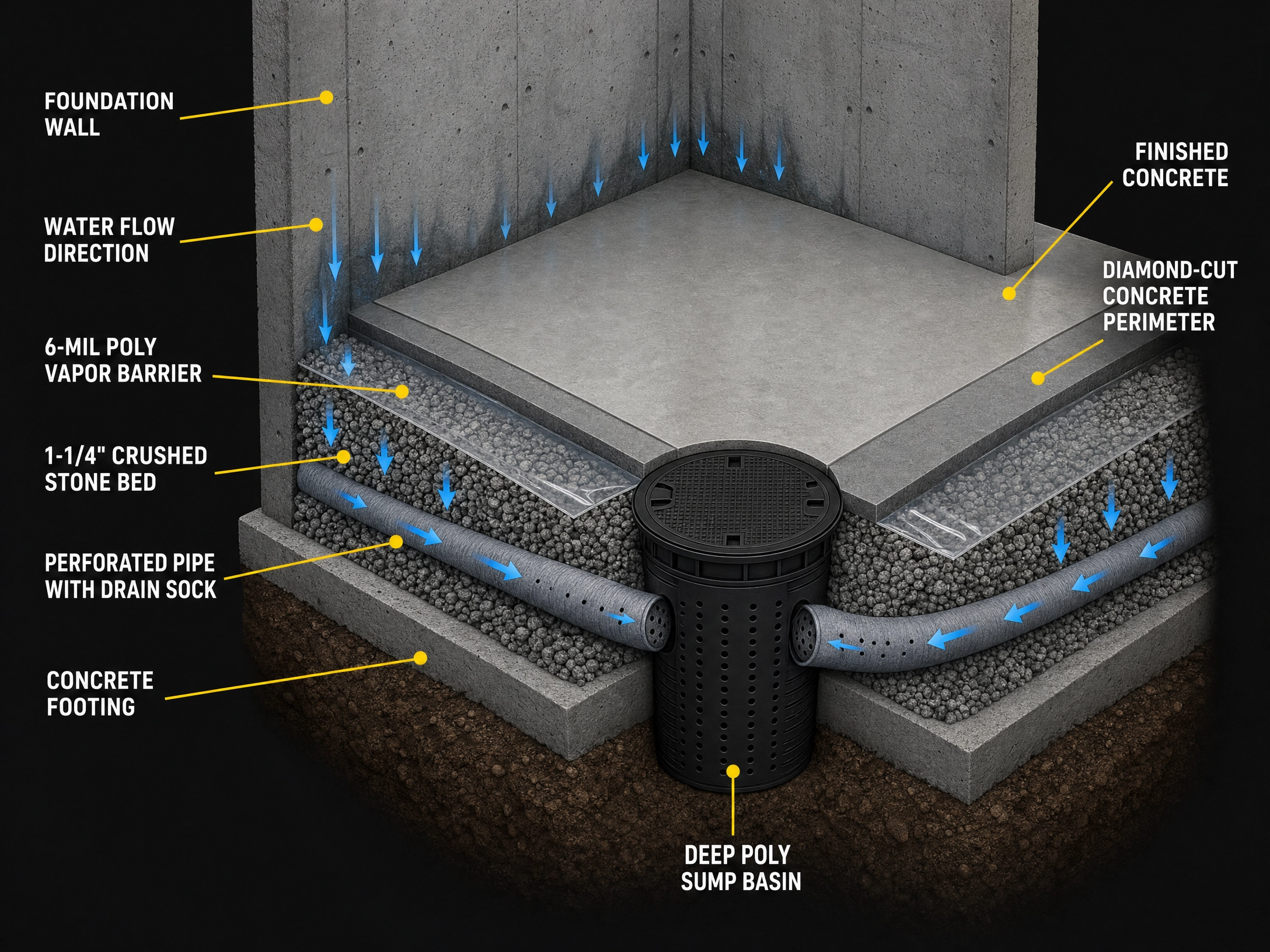
A sump pump alone is not waterproofing, it is a bucket with a motor. Real waterproofing manages the water before it reaches your living space and gives it a guaranteed way out. For most wet basements in this area, that means an interior perimeter drain system tied to a sump basin. Here is exactly how we build one.
Before we cut, we protect the space. We cover your utilities, seal off the ventilation, and tarp your belongings so concrete dust and debris stay contained and out of your HVAC. You get the basement fixed without cleaning up after us for a week.
- Diamond-Cut the PerimeterWe score and cut the concrete slab around the full perimeter of the basement floor, about a foot wide.
- Excavate the TrenchWe break out and haul off the concrete and debris, opening a clean channel along the base of the foundation.
- Lay the Stone BedA bed of 1¼ inch crushed stone goes in as the base for the pipe to sit on and water to move through.
- Set Pipe in a Drain SockWe lay perforated pipe wrapped in a drain sock that keeps sediment out, so the pipe does not silt up and fail down the road.
- Pitch to a Sump BasinThe pipe is pitched to drain into a deep perforated poly sump basin, the low point that collects everything and sends it out.
- Cover With StoneMore 1¼ inch crushed stone goes over the pipe to lock it in place and let water reach it freely.
- Lay the Vapor BarrierWe lay 6 mil plastic across the area as a vapor barrier to hold ground moisture back.
- Finish the ConcreteWe finish concrete over the entire area, so your floor comes back clean and level, not a patchwork.
- Optional: Tie In Surface DrainageOn some jobs we connect a trench drain to capture surface water as well. Most jobs do not need it, and we will tell you straight if yours does.
When the problem is pressure against the wall or a failing exterior, we waterproof from the outside instead, with excavation, a foundation membrane, and exterior footing drains. The walkthrough is what tells us which approach your basement actually needs.
Sparkle Lake, On the Job
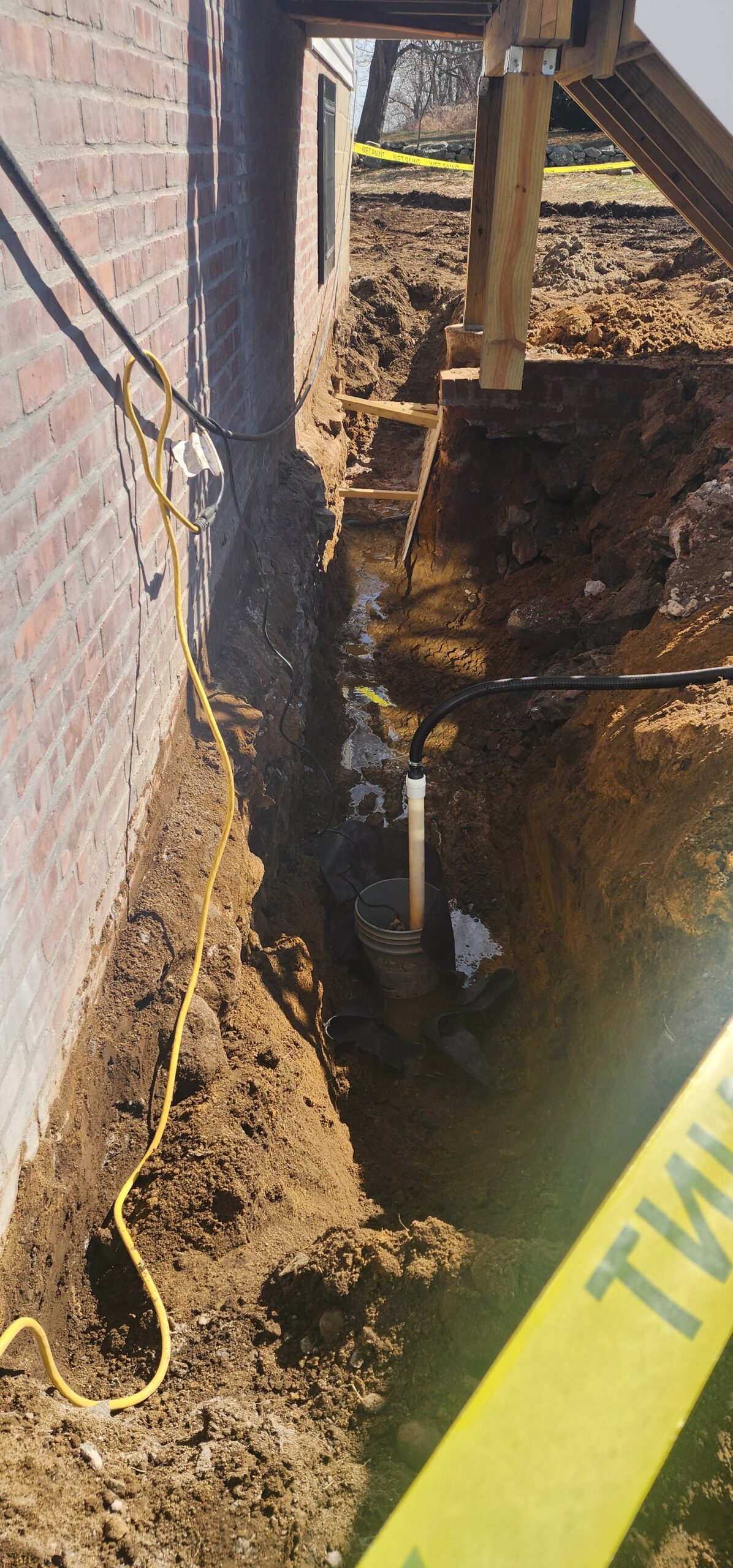
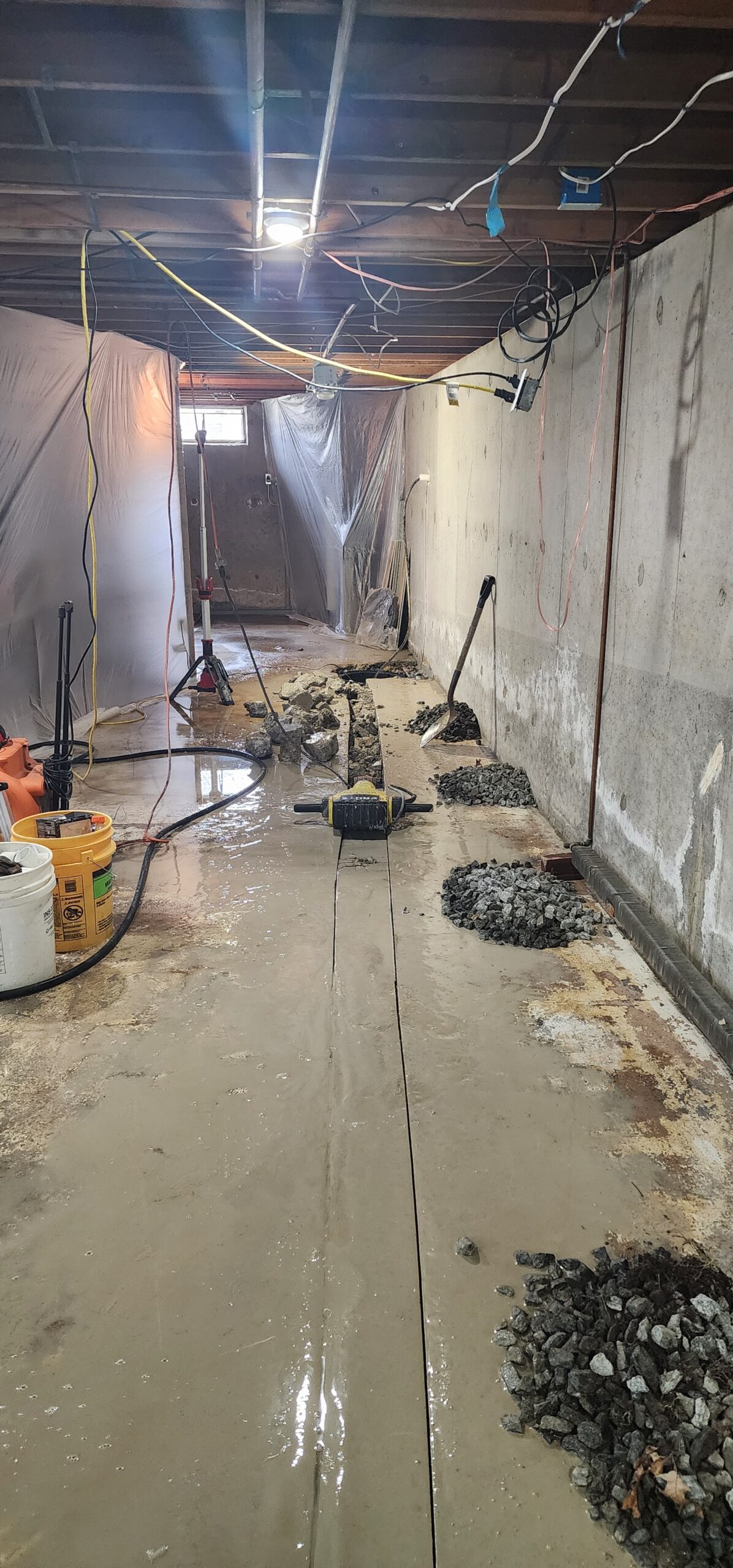
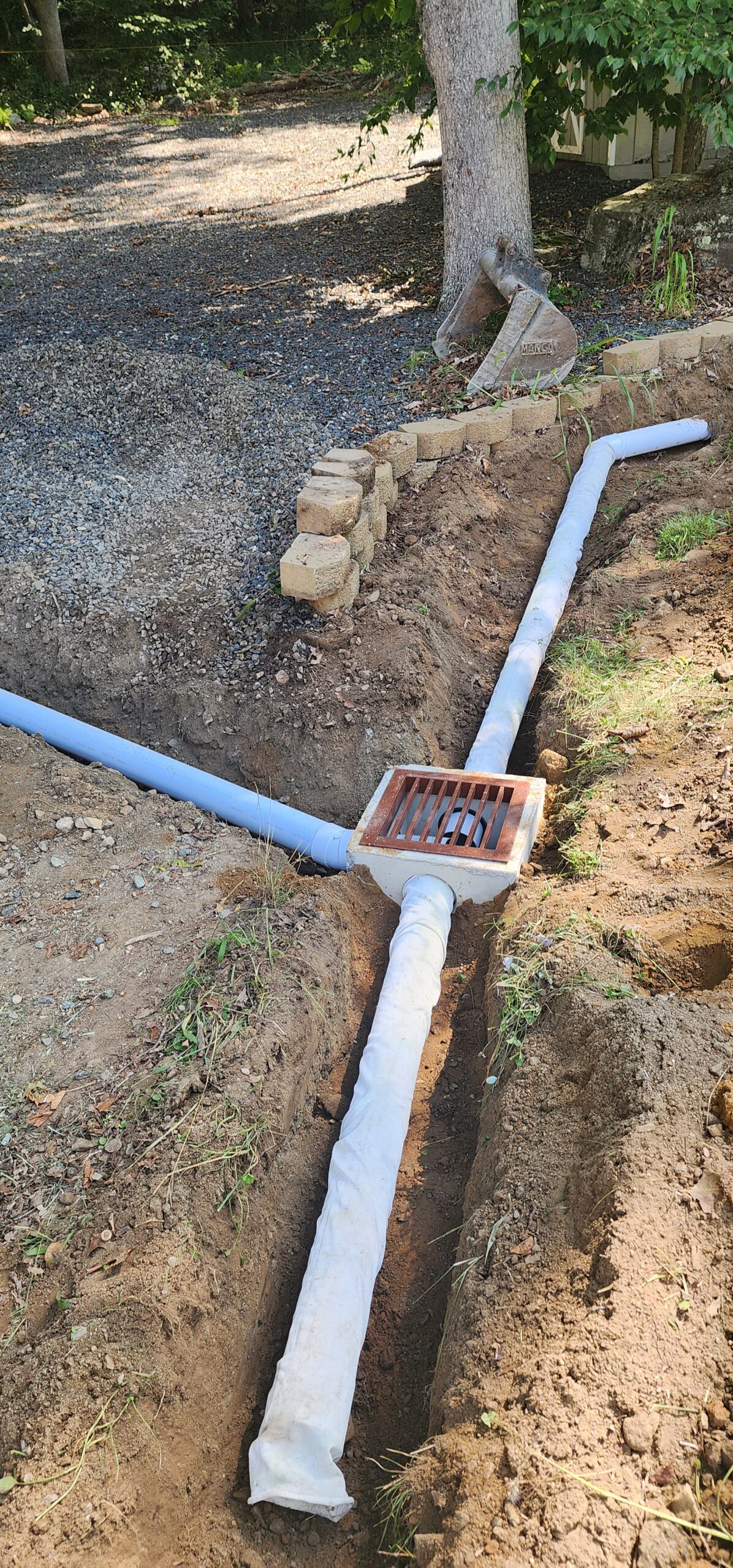
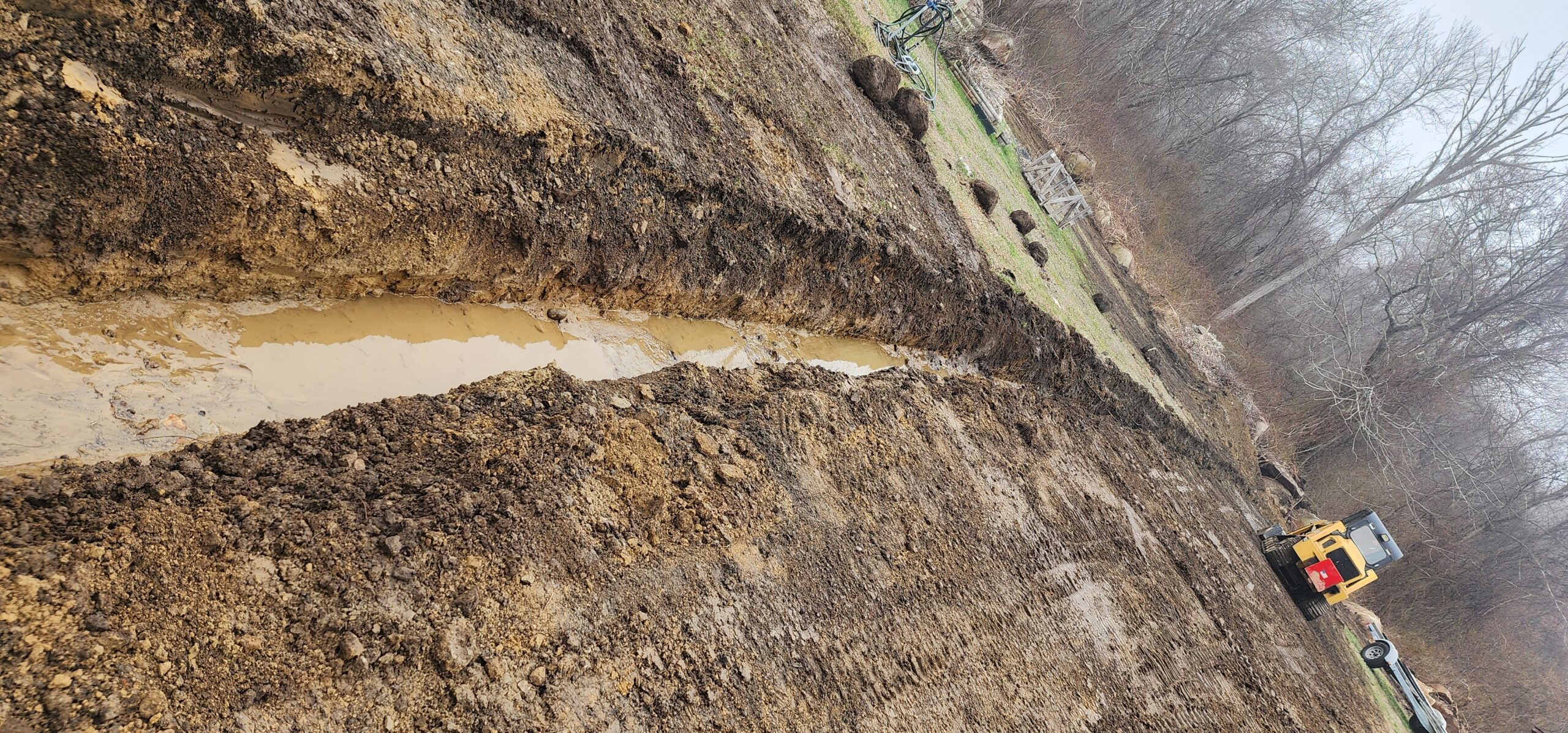
No stock photos, no staged shots. Raw, unedited pictures straight off our own basement waterproofing job sites across New London County. Hover to pause, tap any photo to enlarge.
Dry It For Good.
Bill comes out, walks the basement and the grounds with you, and tells you straight what it takes to keep the water out for good. No pressure, no phone-number games, no charge for the visit.
How the Process Works
The first visit is a walk of the basement and the grounds with you. I want to see where the water shows up downstairs and trace it back to where it is getting in. We talk about what you want, what your budget looks like, then I put together a straight price in writing with the scope spelled out.
On install day, we bring the crew and the equipment. Most basement jobs run one to three days depending on the system, the foundation, and whether exterior work is involved. We clean up after ourselves and walk the finished system with you so you know exactly what is protecting your basement and how it works.
If the water is also showing up in your yard, see our yard and property drainage page, the two jobs often get solved together. We serve Stonington, Groton, Ledyard, Montville, Waterford, and the rest of New London County.
Basement Waterproofing FAQs
It depends on where the water is getting in and what it takes to stop it. Sealing a single crack is a different job than a full interior perimeter drain with a sump system, or exterior work that requires excavation. That is exactly why we walk the basement and give you a straight price in writing with the scope spelled out, instead of a number over the phone we have to change later. The walkthrough is free.
Not on its own. A sump pump moves water that has already collected, but it does not manage where the water is coming from. Real waterproofing combines drainage that captures the water, a pump and outlet that gets it out, and where needed, exterior work that keeps it away from the wall to begin with. We build the right combination for your foundation, not a one-size bucket.
It depends on how the water is getting in. Interior perimeter drains are often the most cost-effective fix and handle the majority of jobs. Exterior membranes and excavation are the right call when the problem is pressure against the wall or a failing exterior. We will tell you straight which your basement actually needs after we see it, not before.
Almost always, yes. A wet basement is usually a drainage problem in disguise, water with nowhere to go ends up against the foundation. The same crew handles both, and solving them together is often the cleaner, more durable fix. See our yard and property drainage page for that side of the work.
Most jobs run one to three days, depending on the system, the foundation, and whether exterior excavation is involved. We bring our own crew and equipment, so we are not waiting on a sub to show up, and we clean up after ourselves before we leave.
All of New London County, including Stonington, Groton, Ledyard, Montville, Waterford, and the surrounding area. If you are nearby and not sure whether you are in range, call and ask.
Request Your Walkthrough
Call (860) 705-7008 to set up an on-site walkthrough with Bill, anywhere in New London County.